



Interior design in North Carolina

About HH Designers and our work in North Carolina
North Carolina's two dominant commercial markets — Charlotte and the Research Triangle — have distinct characters that require different design approaches. Charlotte is a corporate city anchored by financial services. Bank of America and Wells Fargo maintain major headquarters operations here, and the concentration of banking, wealth management, and fintech firms has made Charlotte one of the country's most active markets for high-quality corporate workplace design. The design expectation in Charlotte's financial sector is authority and permanence — these institutions are not looking for trend-forward interiors that will feel dated in five years. They are investing in environments that project stability, institutional credibility, and the ability to attract senior talent from New York, Boston, and other major financial centers.
The Research Triangle — Raleigh, Durham, and Chapel Hill — operates on different cultural terms. Duke University Health System, UNC Health, and NC State's research enterprise create a market where academic and life sciences employers set the design tone. The hospitality sector in the Triangle is shaped by a mix of academic event visitors, biotech and pharmaceutical corporate travelers, and a growing population of young professionals with design exposure and high expectations. The restaurant and food and beverage scene in Raleigh and Durham has matured significantly and now supports environments that compete on design quality. Multifamily development in both Raleigh and Charlotte has been sustained and intense — both metro areas have ranked among the top five in apartment delivery for consecutive years, and the luxury segment of that market is where design quality determines lease-up velocity and achieved rent.
HH Designers approaches the North Carolina market with the same documentation discipline and operational focus we bring to our work in the Northeast. A complete Spec Book, FF&E schedules with lead times, and construction documents formatted for accurate contractor bidding are standard on every project. North Carolina's construction market has absorbed substantial volume during the state's growth period, which means contractor relationships and document clarity matter even more than usual — vague specifications create RFIs that stall schedules in a busy bidding environment. Our package is built to minimize that friction, and our construction administration process keeps the finished environment aligned with the approved design through opening.
Sectors we serve in North Carolina
Corporate headquarters and financial sector workplace
Charlotte's financial sector clients want workplaces that reinforce institutional identity while supporting modern work models — hybrid schedules, collaboration-focused space allocation, and the amenities that make the office competitive with home for a senior workforce. We design headquarters environments, executive suites, trading floors, client-facing conference facilities, and employee amenity spaces that serve those goals. The design language for Charlotte financial sector work is restrained, material-rich, and built to age well rather than trend-surf.
Healthcare and academic medical centers
The Research Triangle's healthcare market is defined by its academic medical institutions — Duke Health, UNC Health, and WakeMed — alongside a growing network of independent physicians groups and specialty practices. We design outpatient medical offices, multi-specialty group practices, skilled nursing and rehabilitation facilities, and hospital ancillary spaces. NC Division of Health Service Regulation standards govern licensed facility projects, and we write specifications to those standards from the programming stage. Academic medical center projects require the detailed submittal packages and multi-stage review management that major health system capital project departments demand.
Luxury multifamily
Charlotte's South End, NoDa, and Uptown neighborhoods have absorbed hundreds of new luxury apartment units over the past several years, with more in the pipeline. Raleigh's North Hills, Midtown, and downtown areas have seen parallel growth. In both markets, luxury developers compete on amenity quality — lobby design, rooftop facilities, fitness centers, co-working environments, and pool areas are the primary decision factors for renters comparing similar locations and price points. We design amenity packages and unit interior programs that achieve lease-up at the top of the market.
Hospitality and food and beverage
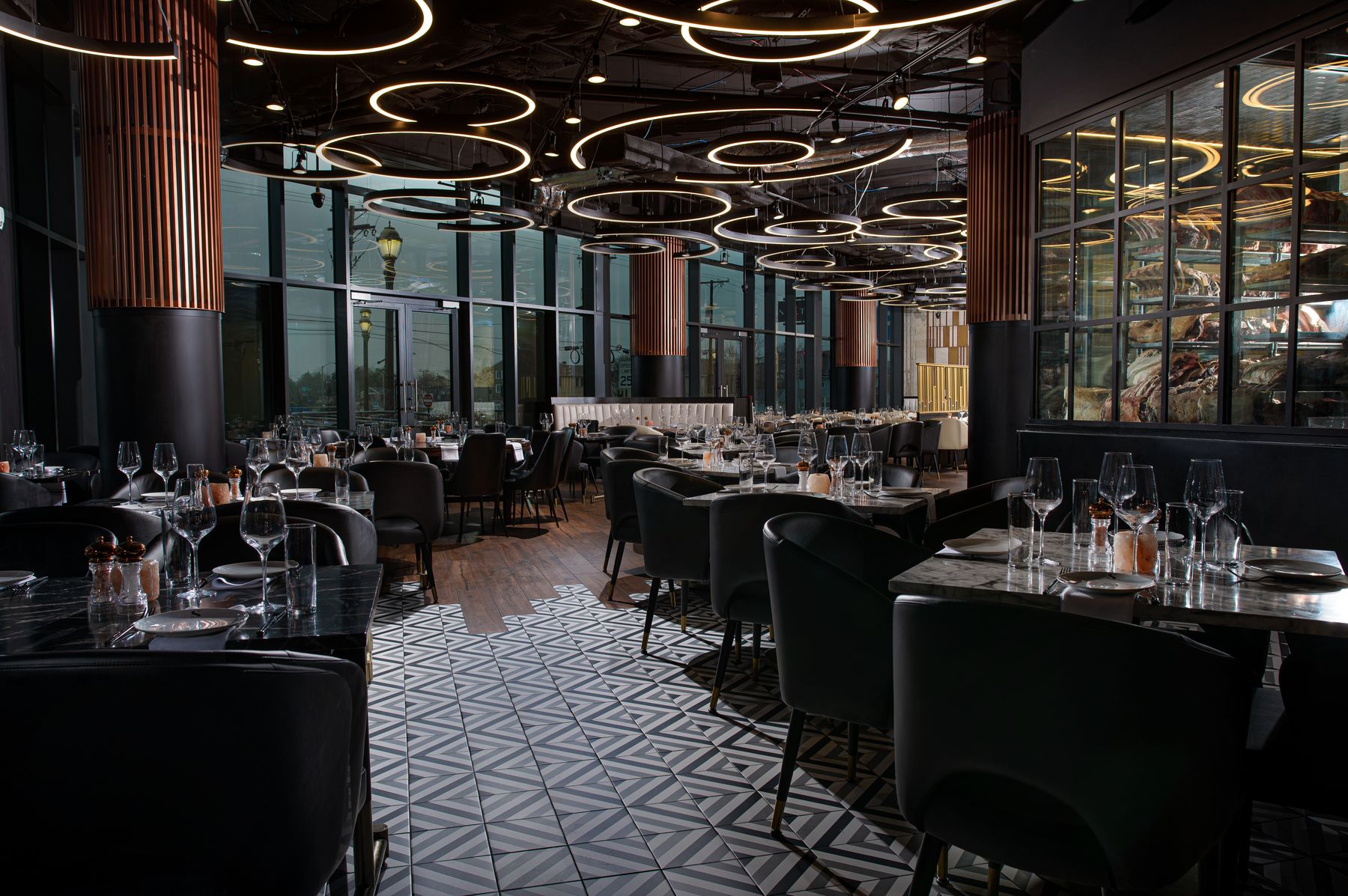
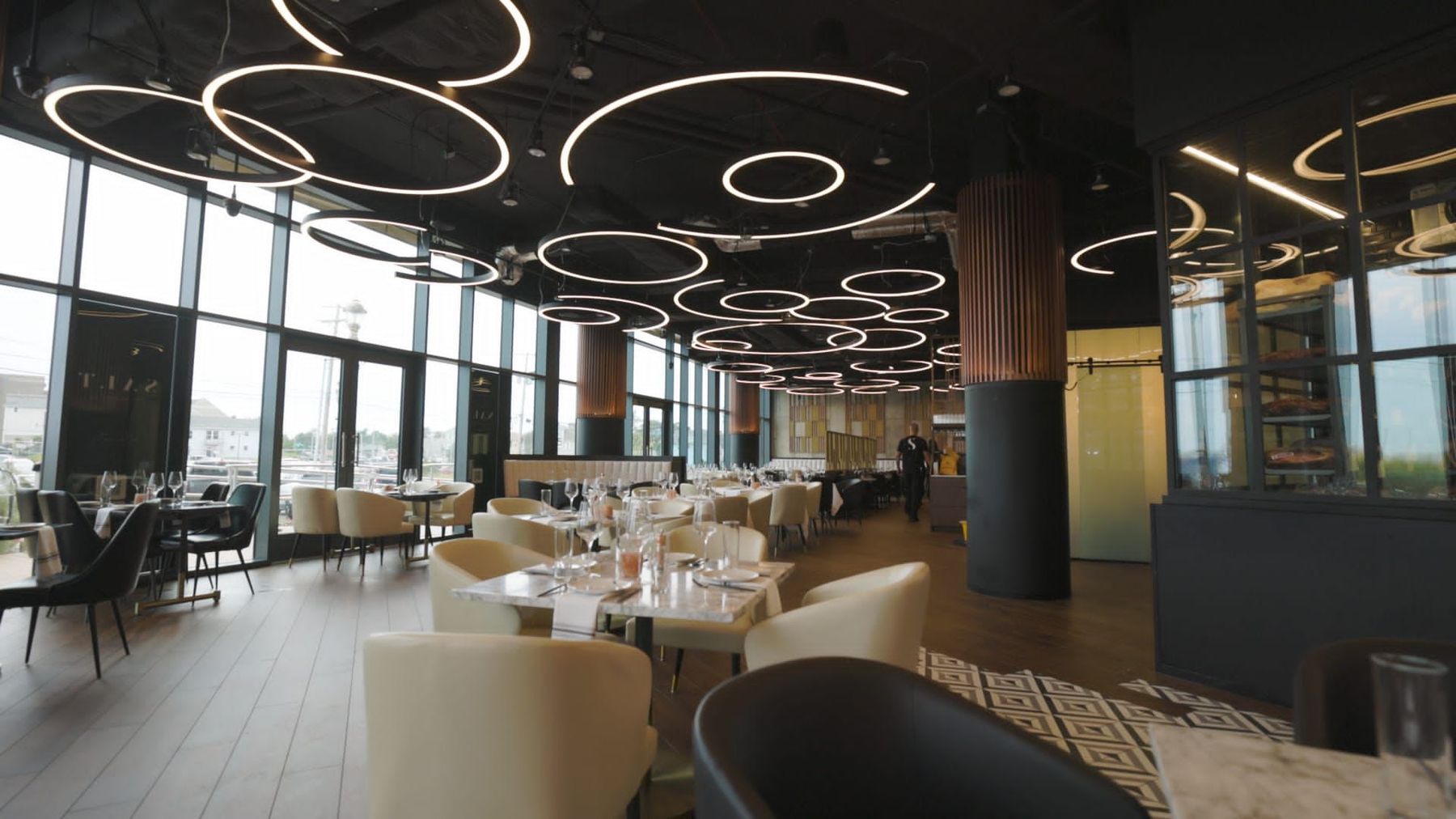
University-adjacent hotels in Chapel Hill, Durham, and Raleigh serve a specific mix of academic visitors, prospective students, and corporate guests using the Triangle's life sciences research ecosystem. These properties require interiors that connect to their academic and cultural context rather than functioning as generic business hotels. Charlotte's restaurant scene has expanded to support genuinely competitive upscale dining, and the city's corporate client base creates strong demand for private dining and event venues tied to restaurants and clubs. We design both contexts with attention to the specific guest experience each market demands.
Design considerations specific to North Carolina
Charlotte's corporate design expectations
Financial services clients in Charlotte bring design expectations shaped by exposure to New York and Boston headquarters environments. They are not looking for the eclectic, local-color-forward design that appeals to hospitality clients in Asheville or the creative sector in Durham. The corporate design language that performs in Charlotte is restrained, material-forward, and built to project institutional permanence. Getting that register right — authority without pomposity, warmth without informality — requires judgment about material selection and spatial scale that cannot be learned from a mood board.
Research Triangle growth dynamics
The Triangle's rapid population and employment growth means the design market is moving fast. New buildings are being designed, approved, and built on compressed timelines driven by lease obligations and investor return schedules. Contractors in the Triangle are busy, which makes document quality even more critical — incomplete documents create RFIs that add weeks to a schedule that is already tight. Our construction document package is built for that environment: specific, complete, and formatted for efficient contractor execution.
North Carolina's climate and material performance
North Carolina's climate spans from the humid Piedmont and coastal plain to the drier Blue Ridge mountain region. Humidity management in coastal and Piedmont interiors affects wood product specifications and HVAC coordination for material performance. Outdoor-to-indoor transitions in summer months create condensation conditions that affect flooring and threshold specifications. We account for climate-specific material performance in our specifications rather than applying a one-size-fits-all product list.
What makes North Carolina's design market distinctive
Two distinct metro cultures in one state
Charlotte and the Research Triangle are separated by two hours of driving and a meaningful cultural gap. Charlotte identifies with the Southeast's financial and corporate culture; the Triangle identifies with its universities and with the technology and bioscience industries they anchor. Design work that lands well in Charlotte — traditional materials, restrained palette, institutional scale — can miss the mark in Durham or Chapel Hill, where the same client might read that approach as stiff rather than authoritative. We calibrate the design brief to the specific market and client culture.
Growth-stage competition for talent and residents
Both Charlotte and the Triangle are in a sustained period of competition for corporate relocations, professional talent, and residents from higher-cost markets. Design quality in workplace, residential, and hospitality environments is a direct input to that competition — companies use their offices as recruitment tools, multifamily developers use their amenity packages as lease-up engines, and hotel operators use their design identity to capture the preferences of a transient corporate population. The investment in design quality has measurable return in these markets.
Our proven design process
Discovery and market brief
North Carolina projects begin with a discovery phase that establishes the competitive context — who the project is competing against, what design expectations the target user brings, and what the owner's return assumptions require from the physical environment. For corporate projects, we document the organizational culture and talent recruitment goals. For multifamily, we analyze the competitive set and the rent premium the amenity package needs to support. This work is upstream of design, but it drives every decision downstream.
Concept development
We develop two to three concept directions before committing to a design path. Each direction is presented with a material palette, mood references, a spatial strategy, and an explicit connection to the market brief established in discovery. This is where Charlotte corporate and Research Triangle creative-sector projects diverge — the concept directions we present for each reflect the client culture and competitive context, not a single aesthetic default.
Design development and material selection
Design development produces detailed plans, elevations, finish schedules, and FF&E specifications. Physical material samples are reviewed in person where project schedules allow. For North Carolina projects, we coordinate material lead times with local supply chain availability — some specialty products that ship next-day in the Northeast require additional lead time for NC delivery, and we factor that into the procurement schedule.
Construction documents and Spec Book
Our construction document package is complete and formatted for accurate contractor bidding. The Spec Book specifies every product and material with manufacturer, model, finish, and quantity. Long-lead items are flagged at CD issue so procurement can begin immediately. NC DHSR requirements are incorporated for licensed healthcare facility projects. Building permit coordination with the architect of record is built into our project schedule.
Construction administration
We manage submittals, RFIs, and site visits through the construction phase. For North Carolina projects, site visits are coordinated with the contractor's installation schedule and the client's operational calendar. Final walkthrough confirms that the built environment matches the approved documents before occupancy or opening.
Ready to design your North Carolina space?
HH work in this space.
All 196 projects →

Hear what clients have to say
"HH Designers understood the Charlotte corporate market from our first briefing — they knew this wasn't a project where we wanted to look creative. We wanted to look permanent. The result is exactly that."
Our work in North Carolina
A few relevant projects from the portfolio.

Planning a project in North Carolina?
Tell us what you’re building. We’ll bring relevant work, a clear process, and straight answers on budget and timeline.
Frequently asked
questions.
Do you design projects in North Carolina?
Yes. HH Designers works with North Carolina clients across corporate workplace, healthcare, hospitality, and multifamily sectors. Our national practice serves Charlotte, Raleigh, Durham, Chapel Hill, Greensboro, Winston-Salem, and other markets across the state. We coordinate with NC-licensed architects on permitted projects.
What types of spaces do you design in North Carolina?
In North Carolina we design corporate headquarters and financial sector offices, healthcare facilities including hospitals, medical offices, and senior living communities, university-adjacent hotel and hospitality environments, luxury multifamily residential developments, restaurants and event venues, and community facilities. The state's rapid growth across both Charlotte and the Research Triangle has driven demand across all of these sectors.
Do you design corporate headquarters in Charlotte?
Yes. Charlotte is one of the country's major banking and financial services centers — Bank of America and Wells Fargo both headquartered here, and dozens of financial sector firms have significant Charlotte presences. These clients require corporate workplace design that projects stability, authority, and institutional quality. We design headquarters environments, trading floors, executive suites, and corporate campus facilities that meet those expectations.
Have you worked on healthcare design in the Research Triangle?
The Research Triangle — Raleigh, Durham, Chapel Hill — has a dense concentration of academic medical centers and life sciences employers, including Duke University Health System, UNC Health, and WakeMed. These institutions have sophisticated design requirements and capital project processes. We understand the procurement and submittal standards that academic medical center projects require, and we produce documentation at that level.
Do you design hospitality projects near North Carolina universities?
University-adjacent hospitality is a distinct market — hotels and conference facilities near Duke, UNC, NC State, Wake Forest, and other NC institutions serve a mix of academic visitors, prospective students and families, alumni event programming, and corporate clients using the academic amenity ecosystem. We design these environments to serve that diverse guest mix while maintaining a sense of place connected to the academic institution and its market.
What is driving North Carolina's multifamily design demand?
North Carolina has experienced substantial population growth — both Charlotte and the Research Triangle have been among the fastest-growing metro areas in the country. That growth has driven a sustained multifamily construction boom in both markets. Luxury multifamily developers in NC compete aggressively on amenity quality, and design is a primary differentiator in lease-up performance. We design amenity packages, unit interiors, lobby environments, and leasing facilities that convert at premium rent levels.
Can you design a restaurant or bar in Charlotte or Raleigh?
Yes. Charlotte's restaurant scene has expanded significantly with its corporate growth — the city now supports sophisticated dining environments that would have been unusual there fifteen years ago. Raleigh and Durham have developed a food and beverage culture tied to the Research Triangle's tech and academic population. We design restaurants and bars for these markets with the same operational rigor we apply in any competitive dining environment — acoustics, service flow, lighting for multi-period service, and durable material selections.
How do you handle project delivery for North Carolina clients from your NJ office?
We have managed national projects from Toms River throughout our practice. Key milestone meetings — discovery, design review, sample review, site visits at critical installation phases — are conducted in person. Coordination with the local architect of record, contractor, and owner's representative follows our standard national project management process. Charlotte and Raleigh are well-served by direct flights from the Northeast, which makes in-person engagement efficient.
What NC healthcare regulations affect interior design?
The NC Division of Health Service Regulation administers licensure for hospitals, nursing facilities, and adult care homes. Licensed facility projects require plan review that covers room areas, finish specifications, and infection control provisions. We write specifications to NC DHSR standards from the programming stage, coordinating with the licensed architect of record on the full permit submission package.
What does a commercial interior design project in North Carolina typically cost?
Design fees are scoped based on project type, square footage, and documentation depth. North Carolina construction costs are generally lower than Northeast markets, which can affect the proportion of design fees to total project budget. We provide a fixed-fee proposal after an initial consultation, with transparent scope definition so you understand exactly what is included.